
Frequently Asked Questions
- How Do I Get Started?
How Do I get Started – Step 1
- What is a Session Border Controller?
A session border controller (SBC) is a network element deployed to protect SIP based voice over Internet Protocol (VoIP) networks.
Early deployments of SBCs were focused on the borders between two service provider networks in a peering environment. This role has now expanded to include significant deployments between a service provider’s access network and a backbone network to provide service to residential and/or enterprise customers.[1]
The term “session” refers to a communication between two parties – in the context of telephony, this would be a call. Each call consists of one or more call signaling message exchanges that control the call, and one or more call media streams which carry the call’s audio, video, or other data along with information of call statistics and quality. Together, these streams make up a session. It is the job of a session border controller to exert influence over the data flows of sessions.
The term “border” refers to a point of demarcation between one part of a network and another. As a simple example, at the edge of a corporate network, a firewall demarcates the local network (inside the corporation) from the rest of the Internet (outside the corporation). A more complex example is that of a large corporation where different departments have security needs for each location and perhaps for each kind of data. In this case, filtering routers or other network elements are used to control the flow of data streams. It is the job of a session border controller to assist policy administrators in managing the flow of session data across these borders.
The term “controller” refers to the influence that session border controllers have on the data streams that comprise sessions, as they traverse borders between one part of a network and another. Additionally, session border controllers often provide measurement, access control, and data conversion facilities for the calls they control. [Wikipedia]
- What is SIP (Session Initiated Protocol)?
The Session Initiation Protocol (SIP) is a signaling protocol used for initiating, maintaining, and terminating real-time sessions that include voice, video and messaging applications. SIP is used for signaling and controlling multimedia communication sessions in applications of Internet telephony for voice and video calls, in private IP telephone systems, in instant messaging over Internet Protocol (IP) networks as well as mobile phone calling over LTE (VoLTE).
The protocol defines the specific format of messages exchanged and the sequence of communications for cooperation of the participants. SIP is a text-based protocol, incorporating many elements of the Hypertext Transfer Protocol (HTTP) and the Simple Mail Transfer Protocol (SMTP). A call established with SIP may consist of multiple media streams, but no separate streams are required for applications, such as text messaging, that exchange data as payload in the SIP message.
SIP works in conjunction with several other protocols that specify and carry the session media. Most commonly, media type and parameter negotiation and media setup are performed with the Session Description Protocol (SDP), which is carried as payload in SIP messages. SIP is designed to be independent of the underlying transport layer protocol, and can be used with the User Datagram Protocol (UDP), the Transmission Control Protocol (TCP), and the Stream Control Transmission Protocol (SCTP). For secure transmissions of SIP messages over insecure network links, the protocol may be encrypted with Transport Layer Security (TLS). For the transmission of media streams (voice, video) the SDP payload carried in SIP messages typically employs the Real-time Transport Protocol (RTP) or the Secure Real-time Transport Protocol (SRTP). [Wikipedia]
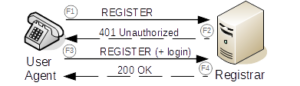
The Internet Engineering Task Force (IETF) publishes the Request for Comment (RFC) which describes the standard. RFC 3265 is the standard for SIP Protocol. Beebop devices are 100% RFC 3265. This means that any PBX that is 100% RFC 3265 compliant, such as FreePBX, Asterisk and Cistera Convergence Server will work with Beebop Devices. Beebop also as a SIP Session Border Controller that supports Microsoft Teams Telephony.